
Dental Implants
A missing tooth, replaced from the root up
Permanent titanium roots with 3D-guided placement for a natural, lifelong bite.
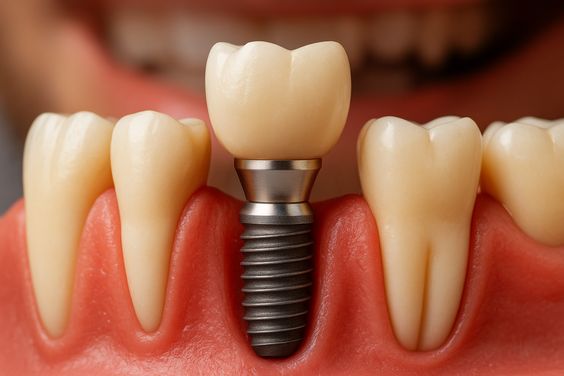
About Dental Implants
A dental implant is a medical-grade titanium root placed into the jawbone, topped with a custom crown that looks and functions like your own tooth. At Gabriel's Dental Clinic we plan every implant digitally on a CBCT scan before the day of surgery, so placement is precise, predictable and comfortable.
Why Dental Implants matters
Losing a tooth is not only cosmetic. The jawbone underneath a gap begins to shrink within months, neighbouring teeth drift, and chewing pressure shifts onto the remaining teeth. An implant is the only replacement that loads the bone like a natural root and keeps it alive. Early assessment by an experienced dentist can protect healthy tooth structure, reduce the risk of complications and help patients choose a treatment plan that supports comfortable chewing, clear speech and lasting oral health.
How the treatment is performed
We start with a CBCT scan and intraoral scan to map bone volume and nerve position. A surgical guide is printed so the implant goes in at the exact planned angle, usually in 30–45 minutes under local anaesthesia. After 3–4 months of healing, the implant is uncovered and a custom zirconia or ceramic crown is fitted. At Gabriel's Dental Clinic in Chengalpattu, every stage is explained before treatment. Digital planning, careful infection control and gentle clinical techniques help make the procedure accurate, comfortable and suited to the condition of each patient's teeth, gums and bite.
When to consider Dental Implants
Ideally within 3–6 months of losing a tooth, while bone volume is still full. Implants can still be placed years later, often with a small bone graft. A dental examination at the first sign of discomfort or visible change usually gives more conservative options than waiting for an emergency. The dentist may use clinical examination and appropriate digital imaging to confirm the diagnosis and recommend the right time for care.
Who is suitable for this treatment
Adults with one, several or all teeth missing, and anyone tired of removable dentures or unwilling to grind healthy teeth for a bridge. Uncontrolled diabetes and heavy smoking are managed first. Suitability is confirmed after reviewing dental health, medical history, expectations and any relevant scans. This individual assessment allows our Chengalpattu dental team to explain alternatives, expected results, recovery and long-term maintenance before treatment begins.
Advantages of Dental Implants
- Feels and chews like a natural tooth — no palate coverage, no slipping
- Preserves jawbone and facial structure for the long term
- Neighbouring healthy teeth are never trimmed down
- A well-maintained implant can last decades
- Digitally guided placement means less swelling and faster healing
If it is left untreated
- Progressive bone loss at the gap, making later treatment more complex
- Adjacent teeth tilt and opposing teeth over-erupt
- Uneven chewing leads to jaw joint pain and cracked teeth
- Sunken cheek or lip support with multiple missing teeth